Most cardio workouts hit just one part of your body. Running and cycling are all about the legs. Rowing is different. Every stroke engages your legs, core, back, and arms, giving you a full-body workout that burns calories and builds real strength.
That’s why connected rowing machines are taking off, after years of walking pads and bikes leading the way. The tech has finally caught up: quiet enough for apartments, smart enough to fix your form, and smooth enough to feel like real water.
Whether you’re training seriously, avoiding high-impact workouts, or want an efficient 20-minute session, there are more genuinely good options now than ever before.
What Defines a Great Rowing Machine?
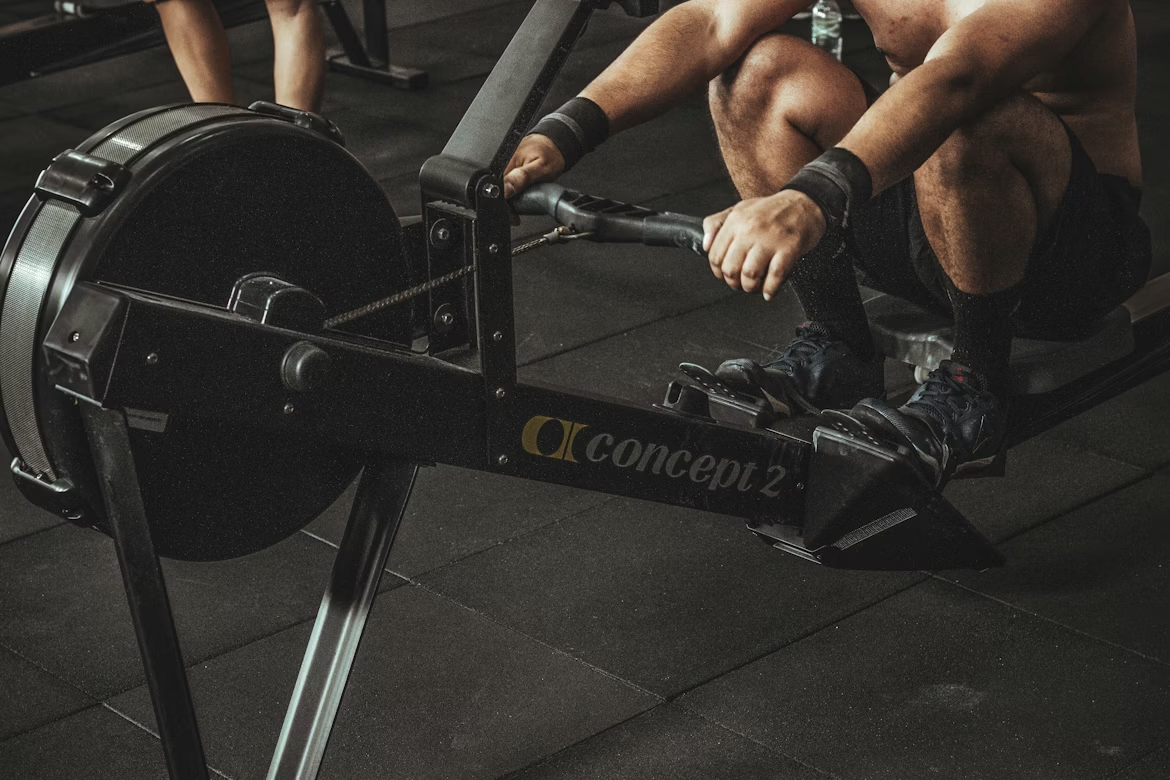
The best rowers go beyond basic resistance and a seat on a rail. AI-powered coaching uses built-in sensors to analyze stroke form in real time, catching the lower back rounding and early arm pull that cause most rowing injuries before they become chronic problems.
Haptic feedback handles simulate different water resistance conditions. Bluetooth 6.0 and ANT+ connectivity sync session data to Apple Health, Google Fit, and third-party platforms automatically.
And vertical furniture-grade storage has replaced the older fold-flat designs for machines that need to live in a living space rather than a dedicated gym room.
Best Rowing Machines for Home Training, Apartments, and Serious Athletes
The seven rowers below cover the full range, from the air-resistance benchmark that Olympic programs and CrossFit boxes have trusted for decades, to a compact magnetic rower that folds into less floor space than a suitcase and operates below 25 decibels.
Each was chosen based on resistance quality, build durability, smart feature integration, and how well it fits a specific training goal and living situation.
1. Concept2 RowErg
The industry standard, refined

The Concept2 RowErg’s position at the top of every serious rowing list isn’t nostalgia; it’s performance.
Olympic training centers, CrossFit competition floors, and university crew programs all use the same machine because the air-resistance flywheel’s response curve is the closest thing to actual on-water rowing that a machine can produce.
Resistance scales directly with effort: pull harder and the resistance increases proportionally, which makes it the only machine on this list that genuinely rewards both novice users and elite athletes without adjustment.
The PM5 monitor tracks split times, stroke rate, watts, and calories with the accuracy that competitive rowing programs require for interval programming.
Bluetooth and ANT+ connectivity handle third-party app integration. Concept2’s own ErgData app, Hydrow, Ergatta, and most major fitness platforms support it.
The monochrome display is functional rather than engaging, but pairing a tablet makes it a full smart rower without the subscription costs that dedicated smart rowers require.
Type: Air resistance | Max user weight: 500 lbs | Connectivity: Bluetooth, ANT+, PM5 monitor
Pros:
- Air-resistance flywheel scales effort-to-resistance more naturally than any magnetic or electromagnetic system. The stroke feel is the most accurate simulation of on-water rowing available
- The 500 lb weight capacity is the highest on this list by a significant margin. Handles virtually any user without structural concern
- PM5 monitor data accuracy is trusted by Olympic programs and competitive rowing organizations worldwide. The benchmark for training metric reliability
Cons:
- Air flywheel noise is the loudest resistance system on this list. Apartment use with downstairs neighbors or thin walls requires consideration
- Monochrome PM5 display requires a paired tablet for class content, video coaching, or any visual motivation beyond raw numbers
Verdict: The only rowing machine on this list that a serious competitive athlete would train on. If data accuracy, build longevity, and genuine rowing feel are the priorities, the Concept2 RowErg is the machine, and has been for years.
2. Hydrow Wave Rowing Machine
Best premium smart rower

The original Hydrow was the right idea in a package that was too large for most living rooms. The Wave keeps the electromagnetic drag system and the 16-inch HD touchscreen, but in a footprint 30% smaller, which changes the practicality calculus significantly.
The electromagnetic resistance is tuned to mimic the drag curve of a real rowing shell on open water. The feel at the catch and through the drive is more nuanced than a fixed-level magnetic system, and the automatic resistance adjustment during instructor-led classes creates a session that responds to the workout rather than requiring manual changes.
The live and on-demand class library is the reason most people buy this over a traditional rower, and the production quality is genuinely high.
Rowing through scenic waterway footage with an on-screen coach providing real-time cues sustains motivation through sessions that would become repetitive on a machine with only a PM5 display.
The monthly subscription is the honest cost of that experience. Factor it into the total price comparison before buying.
Type: Computer-controlled electromagnetic | Max user weight: 375 lbs | Display: 16-inch HD touchscreen
Pros:
- Electromagnetic drag tuned to real rowing shell resistance curves produces a more realistic stroke feel than fixed magnetic resistance levels
- Automatic resistance adjustment during instructor-led classes removes the need for manual level changes mid-session
- Near-silent operation makes it viable for apartment use and early morning sessions without disturbing others
Cons:
- A monthly subscription is required to access the class library that justifies most of the purchase price; a factor that ongoing cost into the buying decision
- The entry price is the highest on this list before the subscription cost is added
Verdict: The most engaging rowing experience available for home use. If visual motivation and instructor-led class structure are what will keep you rowing consistently, the Hydrow Wave is worth the premium. If you’ll train from a training plan without needing on-screen instruction, the Concept2 is the stronger purchase.
3. MERACH Q1S Rowing Machine
Best for small spaces

The Q1S is the apartment rower that 2026 has been building toward. The dual-track stability system keeps the machine solid during hard rowing efforts without requiring the wide base that most stable rowers need, and the fold-down footprint is compact, smaller than a standard carry-on suitcase when stored.
For apartment dwellers where the rower needs to exist in a living space rather than a dedicated room, that storage dimension matters as much as the rowing performance.
Under 25 decibels at normal rowing speeds means the machine is genuinely quiet rather than just marketed as quiet, a meaningful distinction for anyone who’s bought a “whisper-quiet” machine that turned out to be audible through a floor.
The MERACH app handles AI coaching through stroke analysis and provides resistance adjustment without reaching for a manual dial. Sixteen resistance levels cover everything from light recovery rowing to serious interval work.
Type: Magnetic, 16 resistance levels | Smart features: MERACH app with AI coaching, app-controlled resistance | Noise level: Under 25dB
Pros:
- The dual-track stability system maintains structural rigidity during hard efforts without the wide footprint that most stable rowers require
- Sub-25 decibel operation is genuinely apartment-compatible. Verified quiet rather than a marketing claim
- Compact fold-down storage footprint fits spaces where full-size rowers are impractical
Cons:
- Rail length becomes restrictive for users above 6’4″. Tall athletes should verify inseam compatibility before purchasing
Verdict: The strongest choice for apartment dwellers and anyone who needs a full-body rowing machine that stores in a living space without dominating it. The noise level and compact footprint are the two features that separate it from comparably priced competitors.
4. YOSUDA R2 Rowing Machine
Best budget option

The YOSUDA R2 makes the case that a sub-$600 rowing machine doesn’t have to feel like a budget purchase during actual use.
The magnetic flywheel is smooth and consistent across the resistance range. No grinding, no resistance inconsistency between strokes, and no belt-drive noise that cheaper flywheel systems sometimes develop.
The machine handles up to 350 pounds without the frame flex or seat wobble that affects lower-capacity budget options.
The built-in tablet holder is a practical inclusion that removes the need for a separate tablet stand for workout videos or music playback.
The LCD monitor covers the basic training metrics: time, distance, stroke count, and calories, without the advanced split-time and watt tracking that the Concept2 PM5 provides.
Seat padding is on the firmer side, which becomes noticeable after sessions longer than 30 to 40 minutes. A gel seat cover resolves that for users who plan longer steady-state sessions.
Type: Magnetic | Max user weight: 350 lbs
Pros:
- Magnetic flywheel consistency is noticeably above most competitors at this price point. Smooth resistance across all levels without the stroke inconsistency of cheaper systems
- 350 lb weight capacity is above average for the budget category. Handles a wider range of users than the 250 to 300 lb limits common at this price
- Built-in tablet holder supports workout video and app use without a separate mount
Cons:
- Basic LCD metrics cover fundamentals only. No split-time tracking, watt output, or advanced training data that interval programming requires
- Seat padding is firm enough to cause discomfort during sessions of over 30 to 40 minutes without a gel cover
Verdict: The best rowing machine available under $600 for users starting a fitness routine. The flywheel consistency and weight capacity both outperform what the price suggests, and the fundamentals of a full-body rowing workout are fully covered.
5. Echelon Row-7s Smart Rowing Machine
Best for variety

The Row-7s is built around one insight: the space occupied by a rowing machine shouldn’t be single-purpose.
The 24-inch touchscreen rotates 180 degrees, converting the rowing station into a floor-facing display for yoga, core work, and strength training when the machine isn’t being used for rowing.
For users who want a home gym hub rather than a dedicated rowing machine, that flexibility changes the value calculation significantly.
Thirty-two resistance levels provide more granular adjustment than most magnetic rowers offer, and the handlebar-mounted toggle controls handle resistance changes without releasing the grip mid-session.
The rotating screen and 32-level resistance come at a price. The physical footprint is larger than compact alternatives, and full access to the Echelon class library requires a subscription.
For users who will use the off-rower workout content regularly, that subscription covers more than just rowing classes.
Type: Silent magnetic resistance, 32 levels | Display: 24-inch HD touchscreen (rotates 180 degrees)
Pros:
- 180-degree rotating screen converts the rowing station into a floor workout display for yoga, strength, and core sessions. Extends the machine’s use beyond rowing
- Handlebar toggle controls adjust resistance without releasing grip mid-stroke. A practical convenience during interval programming
- 32 resistance levels provide finer adjustment granularity than most magnetic competitors
Cons:
- Physical footprint is larger than compact alternatives. Requires more dedicated floor space than the MERACH or YOSUDA
- Full class library access requires an ongoing Echelon subscription. The rotating screen’s value depends on using that content regularly
Verdict: The right purchase for users who want a home gym hub rather than a single-purpose rower. If you’ll use the off-rower workout content and the rotating screen makes your space more flexible, the Row-7s justifies its price. If you only plan to row, a simpler machine covers the same workout at a lower cost.
6. Sunny Health and Fitness Magnetic Rower
Best for beginners

The Sunny Health rower does something that more complicated machines sometimes fail at: it gets out of its own way.
No subscription to configure, no app pairing process, no resistance levels that require interpretation; eight clearly marked resistance settings, a straightforward monitor showing time, distance, calories, and stroke count, and a machine that’s ready to use five minutes after assembly.
For someone starting a rowing habit who doesn’t want technology between themselves and the workout, that simplicity is the point.
The build is more durable than the price suggests, and the magnetic resistance system is quiet enough for apartment use without the operational noise of air rowers.
For seniors, rehabilitation users, and fitness beginners who want a consistent low-impact full-body workout without a learning curve, the Sunny Health rower removes every obstacle between the decision to row and actually rowing.
Type: Magnetic | Resistance: 8 levels
Pros:
- Eight-level manual resistance and single-button monitor operation require no technical setup, app pairing, or learning curve to begin using
- The magnetic resistance system is quiet enough for apartment and shared living use without the air-rower noise that makes some buildings impractical
- Build quality and frame durability significantly exceed what the price point typically delivers in this category
Cons:
- No app integration, Bluetooth connectivity, or advanced metric tracking. Users who want training data beyond basic stats will outgrow the monitor quickly
- Basic 8-level resistance range limits progression for users who advance to serious interval training or competitive rowing preparation
Verdict: The best starting point for anyone who wants to begin rowing without any friction. Simple, quiet, durable, and affordable. It covers every requirement for a beginner full-body cardio machine and nothing that isn’t needed.
7. Concept2 RowErg (Tall Version)
Best for tall and heavy users

The tall version of the Concept2 RowErg is mechanically identical to the standard model. Same air-resistance flywheel, same PM5 monitor, same 500-pound weight capacity. The difference is the elevated leg frame, which raises the seat height to 20 inches, matching standard chair height.
For users with limited hip mobility, knee or hip replacement recovery, or simply tall enough that getting on and off a standard 14-inch seat height is genuinely awkward, that 6-inch difference changes daily usability significantly.
The 38-inch inseam accommodation covers athletes up to around 6’8″, which addresses the rail-length limitation that tall users encounter on compact and mid-range rowers.
Everything else about the Concept2’s performance, the air resistance scaling, PM5 data accuracy, and 20-year build durability, applies equally to this version.
Type: Air resistance | Max user weight: 500 lbs | User height: Up to 38-inch inseam
Pros:
- The 20-inch seat height matches the standard chair height. Meaningfully easier to mount and dismount for users with hip and knee mobility limitations or during post-surgical rehabilitation
- 38-inch inseam accommodation handles athletes up to approximately 6’8″ without the stroke restriction that shorter-rail competitors impose on tall users
- Identical PM5 performance and 500 lb weight capacity to the standard RowErg. No performance compromise for the ergonomic improvement
Cons:
- Elevated leg frame increases the machine’s vertical profile. Requires ceiling clearance consideration for storage in rooms with lower ceilings
Verdict: The right choice for tall athletes who find standard rower seat heights too low for comfortable use, and for users managing mobility limitations or joint rehabilitation, where getting on and off the machine easily is as important as the rowing performance itself.
Comparison Table: Top Rowing Machines
| Model | Resistance | Smart features | Best for |
| Concept2 RowErg | Air | PM5 / Bluetooth | Pro training |
| Hydrow Wave | Electromagnetic | 16″ HD screen | Immersive experience |
| MERACH Q1S | Magnetic | AI app / compact | Small apartments |
| YOSUDA R2 | Magnetic | Tablet holder | Budget |
| Echelon Row-7s | Magnetic | 24″ rotating screen | Full home gym |
| Sunny Health | Magnetic | LCD stats | Beginners |
| Concept2 (tall) | Air | PM5 / Bluetooth | Tall/heavy users |
How to Choose the Best Rowing Machine for Home Use
Resistance type and stroke feel
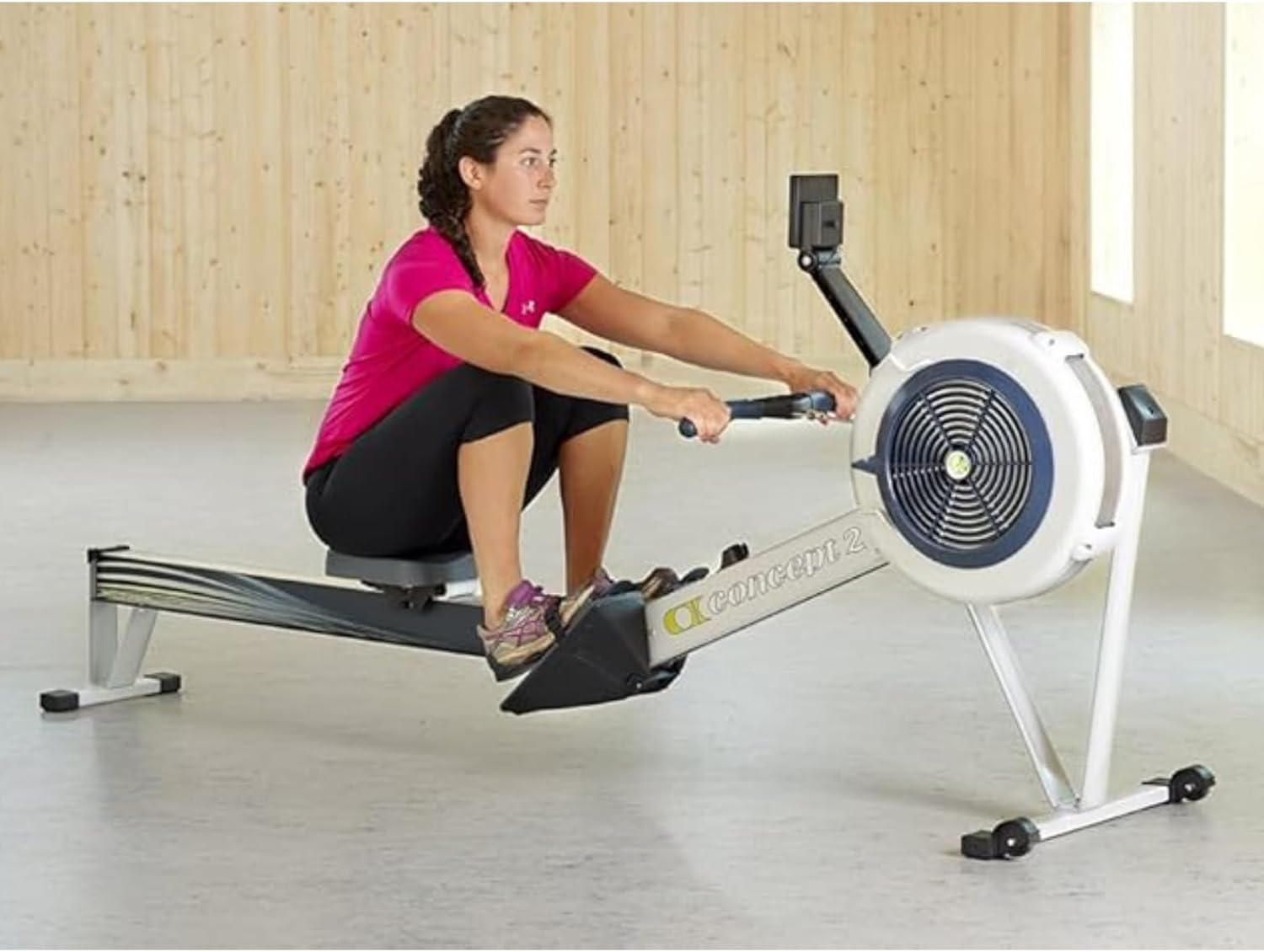
Air resistance scales with effort. Pull harder, and the resistance increases proportionally, which produces the most natural simulation of on-water rowing. It’s the choice for HIIT intervals and competitive training, but the noise level rules it out for apartment buildings and thin-walled homes.
Magnetic resistance applies a consistent, preset level regardless of pulling speed, which is quieter and more predictable but feels less dynamic than air or water.
Electromagnetic resistance (found in the Hydrow Wave) allows the machine itself to adjust resistance automatically during instructor-led classes. The most sophisticated system, and the most expensive.
Water resistance uses a tank to create drag and produces the distinctive swooshing sound that some users prefer aesthetically, but the noise level sits between magnetic and air.
Space and storage requirements
A standard rowing machine runs seven to eight feet long during use. Before buying, measure the floor space against the machine’s assembled dimensions, not just the footprint. You need clearance at both ends for the full stroke range.
For apartments and small rooms, the MERACH Q1S’s compact fold design is specifically engineered for spaces where a full-size rower is impractical. Vertical storage designs keep the rail upright against a wall rather than folding flat, which reduces the floor footprint to roughly the same as a dining chair.
Smart features and connectivity
Bluetooth 6.0 and ANT+ are the connectivity standards worth confirming before buying today. ANT+ specifically handles heart rate monitor pairing with chest straps and watches more reliably than Bluetooth alone during high-intensity intervals where connection stability matters.
Third-party app support varies by machine. Confirm that your preferred platform (Apple Health, Google Fit, Concept2 Logbook, Strava) is compatible before assuming integration is automatic.
Noise levels and living situation
Magnetic and electromagnetic rowers are the only viable options for apartment buildings with noise-sensitive neighbors or shared walls.
Air rowers produce sound comparable to a strong fan at high effort levels. Audible through walls and floors during hard intervals.
Water rowers produce a rhythmic sloshing sound that some users find pleasant, but that carries through floors similarly to air resistance. If in doubt, magnetic is the safe choice.
Frequently Asked Questions
Are rowing machines effective for full-body workouts?
Yes, and more so than most single-machine cardio options. A proper rowing stroke engages the quadriceps and glutes through the leg drive, the core through the mid-drive stabilization, and the back, shoulders, and arms through the finish.
Done correctly, it’s one of the few cardio machines that produces meaningful upper-body training stimulus alongside cardiovascular conditioning.
Is rowing better than running for cardio?
For users with knee, hip, or ankle joint issues, rowing is significantly better. Zero ground impact removes the loading stress that makes running problematic for many people. For pure cardiovascular efficiency, the comparison is close.
Rowing builds more upper-body strength than running, which makes it a more efficient choice if upper-body conditioning matters to the training goal.
Running produces better lower-body impact adaptation and is more transferable to sports and daily movement patterns that involve weight-bearing.
Are rowing machines noisy?
It depends entirely on the resistance type. Magnetic rowers are near-silent. The MERACH Q1S operates below 25 decibels, which is quieter than a normal conversation. Air rowers are the loudest, producing fan-level noise that increases with effort.
Water rowers produce a rhythmic swooshing sound that’s quieter than air but louder than magnetic. For apartment use, magnetic is the only category that avoids neighbor complaints during early morning or late evening sessions.
How many calories does rowing actually burn?
A 30-minute moderate-intensity rowing session burns roughly 250 to 300 calories for an average adult. High-intensity interval rowing pushes that closer to 350 to 400 calories in the same time.
The full-body muscle engagement means post-exercise calorie burn (EPOC) is higher than single-muscle cardio machines, which contributes to total daily energy expenditure beyond the session itself.
Which Rowing Machine Is for You?
For serious training, data accuracy, and a machine built to last two decades, the Concept2 RowErg is the answer. It’s the benchmark the entire category is measured against.
For users who need visual motivation, instructor-led class structure, and a machine that looks at home in a living room, the Hydrow Wave is the most engaging rowing experience available for home use in 2026.
For apartment dwellers where noise and storage footprint are the primary constraints, the MERACH Q1S handles both without sacrificing the full-body rowing workout quality that makes the category worth investing in.