The Apple Watch isn’t just a notification screen for your iPhone anymore. It’s become a much more capable health companion, offering features like blood pressure alerts, smarter sleep insights, live workout coaching, and even off-grid messaging.
It’s no longer about “staying connected,” but about staying healthy. And the tech has finally caught up to that promise.
Picking the right one now isn’t about finding a single “best” model. It’s about what fits your life. Someone training for endurance events will need something very different from a first-time user who just wants simple fitness and sleep tracking. The models below cover that whole range.
Best Apple Watches for Health Monitoring, Outdoor Adventure, and Everyday Wear
The five watches below cover the full range, from the flagship Series 11 with its advanced hypertension alerts and 5G RedCap connectivity, to a renewed Series 9 that still runs watchOS 26 and delivers a modern experience at a budget price.
1. Apple Watch SE (3rd Generation)
Best value for most people
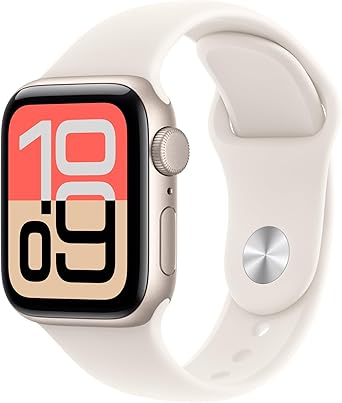
The third-generation SE has closed the gap with the flagship lineup more than any previous SE iteration. The S10 chip is the same processor in the Series 11, which means app performance, Siri response, and workout tracking computation are identical to the more expensive model.
The Always-On Retina display at 1,000 nits is a meaningful upgrade over the second-generation SE’s non-AOD panel, and real-world battery testing consistently exceeds the rated 18 hours in normal use, often reaching 40 hours for moderate users.
What the SE doesn’t include is the ECG app, blood oxygen monitoring, and hypertension alerts. For users under 30 without specific cardiovascular monitoring needs, those omissions matter less than the price difference suggests.
Step tracking, sleep analysis with Sleep Score, crash detection, heart rate monitoring, and temperature sensing cover the health features that most casual fitness and wellness users actually engage with regularly.
The 5G RedCap cellular option is available, which matches the Series 11’s connectivity tier rather than the older LTE standard that previous SE models used.
Type: Budget smartwatch | Key specs: 40mm/44mm aluminum, S10 chip, 18-hour rated battery (40+ hours real-world), Always-On display (1,000 nits), 5G RedCap
Pros:
- S10 chip delivers identical processing performance to the Series 11 at significantly lower cost, making the speed and responsiveness gap between budget and flagship genuinely minimal
- Always-On display is the first time the feature has appeared on an SE model, closing a long-standing gap between the SE and the mainline series
- 5G RedCap cellular option matches the Series 11’s connectivity standard rather than the older LTE technology that previous SE versions used
Cons:
- No ECG app, blood oxygen monitoring, or hypertension alerts, which are the sensors most relevant to users with cardiovascular health monitoring priorities
- Thicker bezels are the most visible external difference from the mainline series at a glance
Verdict: The most capable SE Apple has shipped. For first-time buyers, parents setting up watches for children, users coming from an older Watch generation, and anyone whose health priorities don’t require ECG or hypertension monitoring, the third-generation SE covers everything that matters at a price that’s easy to justify.
2. Apple Watch Ultra 3
Best for battery life and outdoor adventure

The Ultra 3 is not trying to be the most elegant watch on the lineup. It’s trying to be the most capable one under conditions where other watches fail.
The 49mm titanium case, sapphire crystal display at 3,000 nits, and 40-metre depth rating handle the physical demands of open-water swimming, alpine hiking, and desert ultramarathons in a way that the mainline series is not engineered for.
The L1/L5 dual-frequency GPS provides positioning accuracy that single-frequency GPS loses in challenging environments like dense forests, canyon terrain, and high-rise urban corridors.
The 2026 addition of enhanced satellite connectivity for off-grid messaging changes the safety calculation for solo outdoor athletes. Sending a location update or emergency message from a trail with no cellular coverage was previously a separate device requirement. The Ultra 3 handles it from the wrist.
Battery life sits at 42 hours in standard mode and 72 hours in Low Power Mode, which covers multi-day backpacking trips and ultra-distance events that a 24-hour watch simply cannot.
Type: Rugged outdoor smartwatch | Key specs: 49mm titanium case, sapphire display (3,000 nits), 42-hour battery (72-hour low power), L1/L5 dual-frequency GPS | Sensors: All Series 11 sensors, plus depth gauge (40m) and water temperature
Pros:
- 72-hour low-power battery covers multi-day outdoor events and remote trips where charging access doesn’t exist
- L1/L5 dual-frequency GPS maintains accurate positioning in forests, canyons, and urban environments where single-frequency GPS loses signal reliability
- Satellite messaging connectivity enables off-grid communication from remote locations without a separate satellite communicator device
Cons:
- The 49mm titanium case is too large for smaller wrists, and the bulk is noticeable in formal or office settings, where a lower-profile watch would suit better
- Price premium over the Series 11 is significant and only justified if the outdoor and endurance use cases are genuinely part of regular life
Verdict: Overkill for the office and daily errands, but the right tool for anyone who regularly operates in environments where a standard smartwatch would fail. Hikers, divers, ultrarunners, and endurance athletes will find it difficult to go back to a lighter watch once they’ve used it in the field.
3. Apple Watch Series 11
Best overall Apple Watch
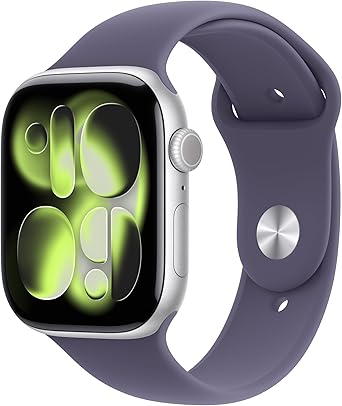
The Series 11 is the clearest expression of what Apple has been building toward with the mainline watch: a medical-grade health platform that wears like a fashion accessory.
The S10 chip and LTPO3 display combination pushes battery life to 24 hours of normal use for the first time in the non-Ultra lineup, which closes the most persistent practical complaint about daily Apple Watch ownership.
For users who previously needed to charge mid-day or adopt low-power mode by evening, the difference is immediately felt.
The hypertension alert system represents the most clinically significant sensor addition in recent Apple Watch history. FDA-cleared notifications for irregular blood pressure patterns caught during passive background monitoring add a genuine health utility that goes beyond the ECG and SpO2 sensors of previous generations.
The Workout Buddy AI coach provides real-time audio cues calibrated to your current heart rate, training load, and recent recovery data, rather than generic interval prompts.
The 5G RedCap cellular connection stays fast without the battery penalty that previous LTE implementations carried.
Type: Flagship smartwatch | Key specs: 42mm/46mm Wide-angle OLED (2,000 nits), S10 chip, 64GB storage, 24-hour battery life, 5G RedCap, WR50 water resistance | Sensors: ECG, SpO2, skin temperature, heart rate, hypertension alerts
Pros:
- 24-hour battery life is the first meaningful battery improvement in the mainline series in several years, driven by S10 chip efficiency and LTPO3 display management
- FDA-cleared hypertension alerts add clinical health monitoring that passive background tracking makes genuinely useful rather than requiring deliberate measurement sessions
- Workout Buddy AI coaching adjusts real-time audio cues to current biometric load rather than delivering the same generic interval guidance regardless of fitness state
Cons:
- Visual design is carried over from the Series 10 with no external change, which may disappoint users upgrading specifically for a fresh aesthetic
Verdict: The right watch for most iPhone users today. The hypertension monitoring and extended battery life are the two upgrades that justify the price over the Series 10 for anyone concerned about cardiovascular health or frustrated by daily charging logistics.
4. Apple Watch Series 10
Best slim design and value flagship

The Series 10 made a specific engineering bet: that a thinner watch worn more comfortably under a shirt cuff or during sleep would be used more consistently than a feature-complete but bulkier alternative.
At 9.7mm thick, it’s the slimmest Apple Watch ever made, and the difference is perceptible during daily wear in a way that millimeter comparisons on paper don’t fully convey. It disappears under a dress shirt sleeve and sits low enough on the wrist that sleeping with it on is comfortable rather than intrusive.
Now that the Series 11 has replaced it as the current flagship, the Series 10 sits at a reduced price while retaining nearly the full feature set: ECG, SpO2, sleep apnea detection, temperature sensing, and the S10 chip.
The battery difference (18 hours rated versus the Series 11’s 24 hours) is the main practical concession, though the fast charging (80% in 30 minutes) partially offsets that for users who charge while getting ready in the morning.
Type: Previous-generation flagship | Key specs: 42mm/46mm Wide-angle OLED (2,000 nits), S10 chip, 18-hour battery, fast charging (80% in 30 minutes) | Sensors: ECG, SpO2, skin temperature, sleep apnea detection
Pros:
- 9.7mm thickness is the slimmest Apple Watch profile available, making it the most comfortable option for under-sleeve professional wear and overnight sleep tracking
- Full flagship health sensor suite, including ECG, SpO2, and sleep apnea detection, at a price that has dropped since the Series 11 launch
- Fast charging recovers 80% battery in 30 minutes, which makes the shorter 18-hour rated life more manageable for users who charge during morning routines
Cons:
- 18-hour rated battery life is shorter than the Series 11’s 24-hour rating, which matters for users who consistently wear the watch through a full day and evening without a charging window
Verdict: The right choice for professionals who want the full flagship health feature set in the slimmest available form factor, and for buyers who want Series 11 capability at a price that reflects its successor’s launch.
5. Apple Watch Series 9 (Renewed)
Best entry-level professional pick
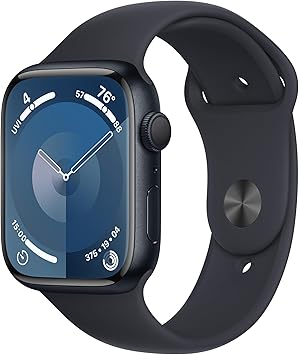
The Series 9 introduced Double Tap as a gesture control method, and the feature has embedded itself into daily Apple Watch use patterns in a way that makes it genuinely hard to give up once you’ve built the habit.
Controlling the watch without touching the screen, answering calls, dismissing timers, and navigating notifications with a finger pinch is useful in the situations that matter most: hands occupied during cooking, gloves on during cold weather, and one-handed operation while carrying something.
The S9 chip runs watchOS 26 without performance issues, and 2,000 nits peak display brightness holds up in direct sunlight, where older Watch generations wash out.
Purchasing through reputable renewed channels brings the cost down significantly compared to current-generation models. The design carries thicker bezels than the Series 10 and 11, and charging speed is slower than the fast-charge implementation on newer models.
For users upgrading from a Series 4, 5, or 6, the jump in sensor capability, display quality, and performance is substantial regardless of those relative limitations.
Type: Value renewed pick | Key specs: 41mm/45mm, S9 chip, 18-hour battery, 2,000 nits peak brightness, Double Tap gesture control
Pros:
- Double Tap gesture control is a genuinely useful daily feature that has carried forward into current watchOS versions and remains one of the more practical interaction improvements in recent Apple Watch history
- S9 chip handles watchOS 26 and current apps without performance concessions, making the renewed purchase feel current rather than dated
- 2,000 nits peak display brightness matches the Series 11’s outdoor visibility performance despite the older hardware generation
Cons:
- Thicker bezels are the most visually apparent generational difference compared to the Series 10 and Series 11
- Charging speed is slower than the fast-charge implementation on newer models, which extends the time needed to recover from a low battery during the day
Verdict: The S9 chip and Double Tap gesture control make the Series 9 feel more current than its launch year suggests. For buyers upgrading from a Watch Series 5 or older on a strict budget, the renewed market price delivers a genuinely modern experience without the cost of a current-generation model.
At a Glance: The Top 5 Apple Watches
| Feature | Series 11 | Ultra 3 | SE (3rd Gen) | Series 10 | Series 9 |
| Case material | Alum/titanium | Titanium | Aluminum | Alum/titanium | Aluminum |
| Max battery | 24–43 hours | 42–72 hours | 18–46 hours | 18–36 hours | 18 hours |
| Display | LTPO3 (2,000 nits) | LTPO3 (3,000 nits) | LTPO (1,000 nits) | LTPO3 (2,000 nits) | LTPO2 (2,000 nits) |
| Advanced health | ECG, SpO2, hypertension | ECG, SpO2, hypertension | Heart rate only | ECG, SpO2, apnea | ECG, SpO2 |
| Connectivity | 5G RedCap | 5G + satellite | 5G RedCap | LTE | LTE |
How to Choose the Best Apple Watch
Ultra vs. Series vs. SE
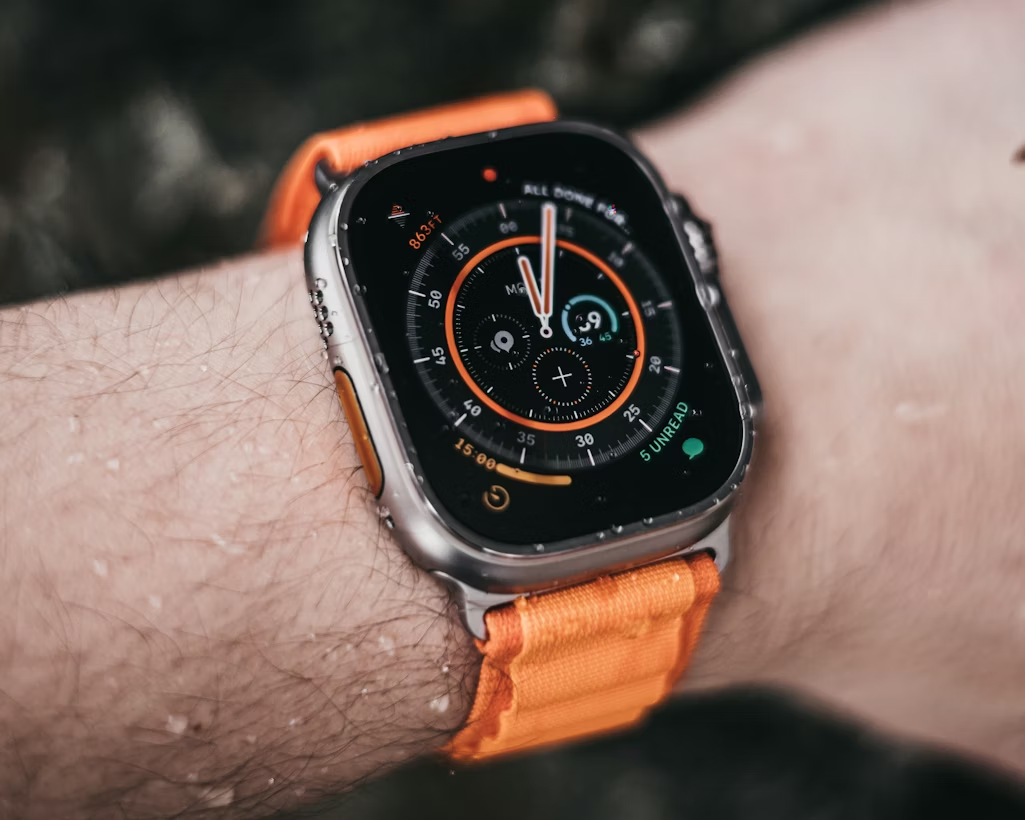
The Ultra is equipment rather than a consumer product. It makes sense for people who regularly operate in environments that would damage or outlast a standard watch: open-water swimming, alpine climbing, multi-day ultramarathons, and remote hiking where satellite messaging is a safety requirement rather than a feature.
The mainline Series is the right watch for most adults, specifically those over 30 whose health monitoring priorities extend to ECG, blood oxygen, and hypertension tracking.
The SE is the practical choice for first-time buyers, children’s safety monitoring, and anyone whose health priorities are covered by heart rate, sleep, and activity tracking without the medical-grade diagnostic sensors.
GPS vs. cellular
GPS-only models work well for users who carry their iPhone to the gym, on runs, and through most of the day.
Cellular becomes genuinely useful for athletes who train without their phone, users who want to leave the phone at home occasionally, and anyone who wants call and message access during activities where carrying a phone is impractical.
The 5G RedCap implementation on the Series 11 and SE (3rd Gen) is meaningfully faster and more battery-efficient than the older LTE cellular in the Series 9 and Series 10, which is worth factoring into the decision for cellular buyers.
Build materials
Aluminum is lighter and more affordable, but it uses Ion-X glass, which scratches more readily than sapphire crystal over the years of daily wear.
Titanium cases use sapphire crystal displays that stay visually clean through years of regular use, resist scratching from keys and desk surfaces, and carry a noticeable price premium.
For users who plan to keep the watch for three or more years, the sapphire crystal durability difference is worth considering against the total cost of ownership over that period.
Frequently Asked Questions
Which Apple Watch is the right choice for most people?
The Series 11 covers the widest range of user needs with the latest health sensors, 5G RedCap connectivity, and the first meaningful battery life improvement in the mainline series. For users whose health priorities don’t include ECG or hypertension monitoring, the SE (3rd Gen) with the S10 chip and Always-On display delivers nearly the same daily experience at a significantly lower price.
Is the Apple Watch worth buying over other smartwatches for iPhone users?
For iPhone users specifically, the integration with Apple Health, iMessage, Apple Pay, and the broader Apple ecosystem creates a continuity that competing wearables from Garmin and Google can’t replicate on iOS. The health sensor data feeds directly into Apple Health’s longitudinal tracking without third-party sync, and the Workout Buddy AI coaching pulls from that accumulated data for personalized training recommendations.
Do you need an iPhone to use an Apple Watch?
Yes. Initial setup requires an iPhone, and full functionality including app installation, health data sync, and ecosystem features depends on an active iPhone connection. Apple Watch is not compatible with Android devices in any configuration.
Is the Apple Watch genuinely useful for fitness tracking?
The Workout Buddy AI coach is the most significant fitness feature addition. It monitors training load across sessions, suggests rest days based on recovery biometrics, and provides real-time audio cues calibrated to current heart rate and effort rather than a fixed interval script.
For users who previously needed a separate coaching app, the built-in capability on watchOS 26 covers most of that functionality natively.
Bottom Line
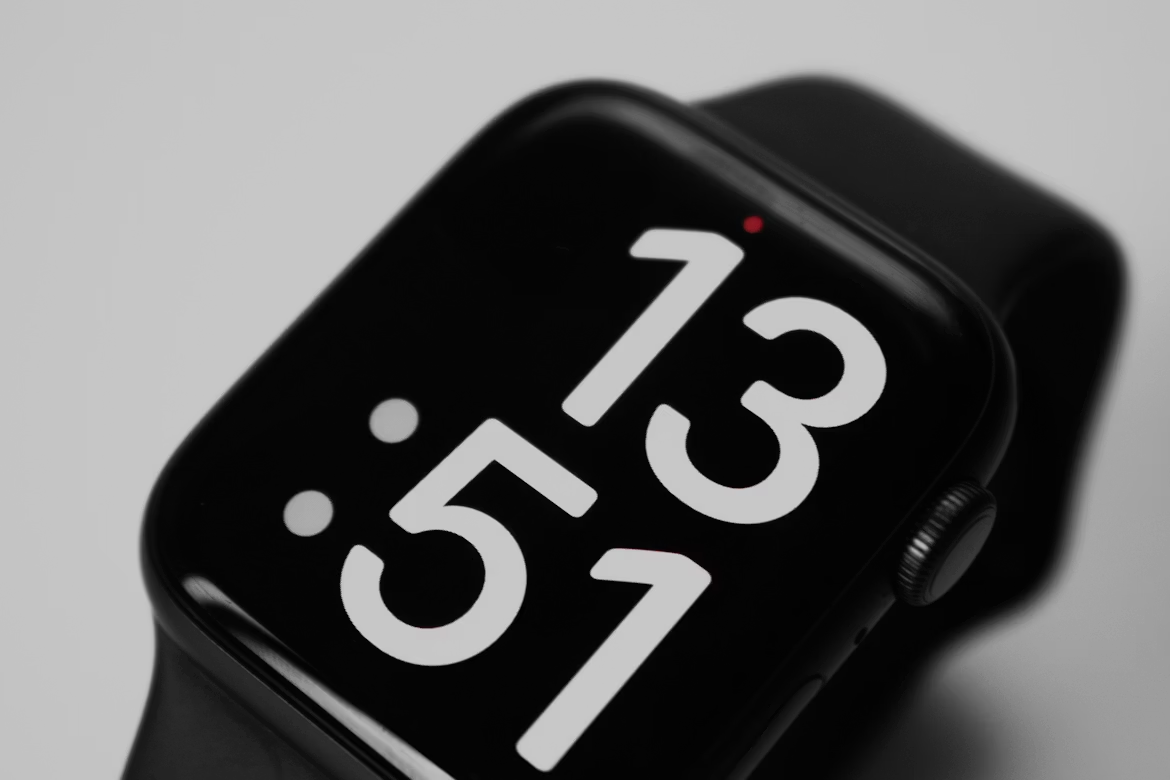
For the latest health technology, including hypertension monitoring and Workout Buddy AI coaching with improved battery life, the Series 11 is the clearest recommendation for most iPhone users right now.
For outdoor athletes, endurance runners, divers, and anyone who needs multi-day battery life and satellite messaging in remote environments, the Ultra 3 justifies its price through capabilities the mainline series can’t match.
For the widest range of buyers looking for the best value, the Apple Watch SE (3rd Gen) with its S10 chip, Always-On display, and 5G RedCap connectivity is the most capable budget Apple Watch ever made, and it’s all the watch that 80% of users actually need.