Electric pressure washers used to feel like the compromise option next to gas models. Not anymore.
The latest machines are quieter, easier to store, and powerful enough to handle serious cleaning jobs without the hassle of fuel, engine maintenance, fumes, or ear-splitting noise.
Thanks to better motors, improved pumps, smarter nozzles, and more durable hose systems, modern electric washers can now tackle driveways, patios, siding, decks, and cars with performance that gets surprisingly close to gas-powered machines for most homeowners.
That doesn’t mean every model is worth your money.
Best Electric Pressure Washers
A lot of cheaper electric pressure washers still suffer from plastic fittings that leak, hoses that kink constantly, weak foam cannons, and pumps that struggle after repeated seasonal use. Long-term user discussions especially highlight frustration around overheating motors and flimsy accessories.
We looked at real-world cleaning performance instead of inflated marketing claims. That means testing how these machines handle dirty concrete, mildew-covered patios, vehicles, siding, outdoor furniture, and long cleaning sessions where weaker units often start losing pressure.
1. Greenworks 3000 PSI TruBrushless Electric Pressure Washer
Best for Driveways and Heavy Cleaning
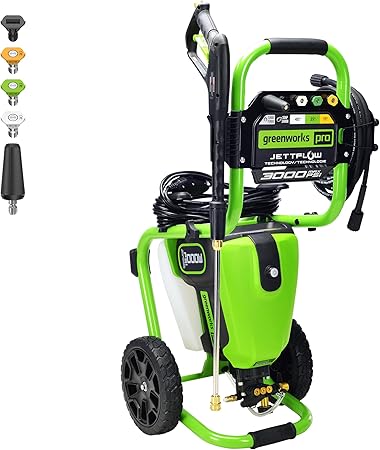
- Up to 3000 PSI
- 2.0 GPM peak flow
- Brushless induction motor
- Heavy-duty electric model
If your main goal is cleaning concrete, brick, fencing, or heavily stained patios, this Greenworks model is the one that feels closest to a gas pressure washer.
Industry testing consistently ranks Greenworks among the strongest electric performers thanks to its verified pressure output and strong flow rate.
This thing moves dirt fast. Driveway cleaning is where the extra GPM becomes noticeable. Cheaper units can technically hit similar PSI numbers but clean slower because water flow is weak.
Real-World Use
The steel-braided hose is a major upgrade over the stiff plastic hoses bundled with budget washers. It stays flexible and resists kinking better during colder weather.
Noise levels are still far lower than gas models, though the motor is noticeably louder than smaller compact units.
The biggest downside is size. This is not a pressure washer for small spaces. It’s heavier, bulkier, and takes more effort to move around stairs or cramped patios.
Assembly also takes longer than average.
Pros
- Excellent driveway cleaning
- Strong GPM performance
- Durable brushless motor
- Better hose quality
- Stable large wheels
- Very consistent pressure
Cons
- Heavy
- Larger storage footprint
- Pricier than entry-level models
Best For
Pressure washer for driveways | Large patios | Deck restoration | Frequent weekly use | Heavy residential cleaning
Verdict
If you regularly clean concrete or siding, the added cleaning speed alone makes this worth the extra cost.
2. DeWalt DWPW2100
Best Overall Electric Pressure Washer
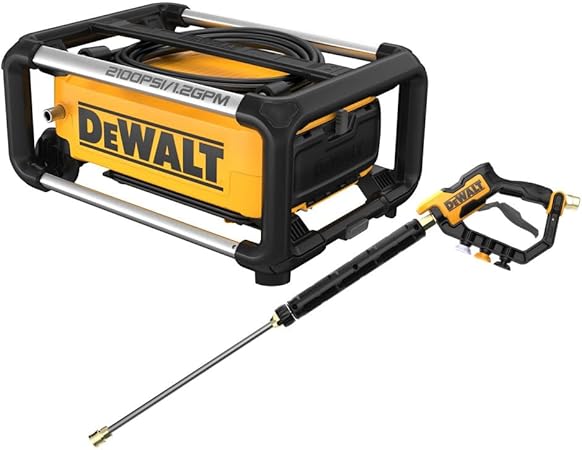
- 2100 PSI
- 1.2 GPM
- Compact electric pressure washer
- Universal motor system
The DeWalt DWPW2100 feels like a pressure washer designed by people who actually use pressure washers regularly.
What really makes this stand out is the balance. It doesn’t chase absurd PSI marketing numbers. Instead, it delivers consistent pressure, smooth operation, solid maneuverability, and surprisingly refined ergonomics for a pressure washer for home use.
The compact frame is a huge win if you store tools in a crowded garage. Unlike bulky upright units that constantly snag hoses and cords, this one stays manageable and stable.
For patios, outdoor furniture, siding, and weekly driveway touch-ups, the cleaning power feels more than adequate. It’s especially effective on algae buildup and medium-duty grime.
Where this pressure washer shines is in day-to-day usability. The hose management is cleaner than most competitors, setup is fast, and the spray wand feels sturdy instead of toy-like.
Real-World Use
During longer sessions, the pressure delivery stays surprisingly stable. That matters because many budget electric units start pulsing or weakening after 20–30 minutes.
The foam cannon performance is decent for car washing, though serious detailing enthusiasts will still prefer something like the Active 2.0.
The biggest tradeoff here is raw power. If you regularly clean deeply stained concrete or large driveways, you may want more GPM.
Pros
- Compact storage-friendly design
- Easy setup
- Stable wheels
- Quiet electric pressure washer operation
- Reliable pressure consistency
- Durable fittings
Cons
- Hose could be longer
- Not the strongest for large concrete restoration jobs
Best For
Most homeowners | Patio cleaning | Small-to-medium driveways | Weekly maintenance | First-time buyers
Verdict
For most homeowners, this is the easiest electric power washer to live with long-term. It avoids many of the reliability frustrations cheaper models struggle with.
3. Sun Joe SPX3000
Best Budget Electric Pressure Washer
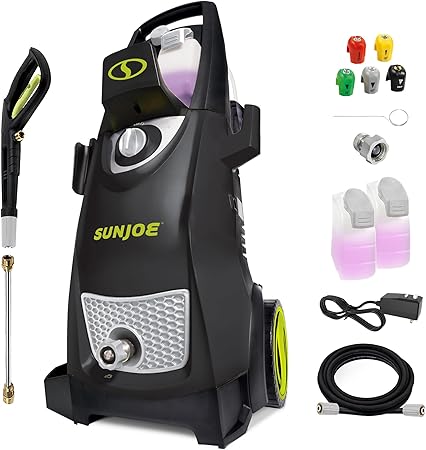
- 2030 PSI
- 1.76 GPM
- Portable residential washer
The Sun Joe SPX3000 has been popular for years because it hits the sweet spot between affordability and actual usable performance.
It’s still one of the best entry-level electric pressure washers for homeowners who mainly clean patios, cars, siding, and outdoor furniture.
What really makes this stand out is versatility. The dual detergent tanks are genuinely useful if you switch between car soap and general cleaners.
Real-World Use
For lighter driveway cleaning and patio maintenance, it performs surprisingly well.
The biggest tradeoff here is durability. Long-term users sometimes report hose wear, connector leaks, and pump issues after repeated seasonal use.
The hose also tangles more than premium braided options.
Still, setup is easy, storage is compact, and the machine remains beginner-friendly.
Pros
- Excellent value
- Compact pressure washer design
- Lightweight
- Good nozzle variety
- Easy assembly
Cons
- Hose quality is average
- Plastic fittings feel cheaper
- Not ideal for heavy-duty concrete cleaning
Best For
Budget buyers | Apartment or townhouse owners | First-time pressure washer users | Small patios and decks | Car washing
Verdict
For occasional residential cleaning, this remains one of the easiest recommendations under the premium price tier.
4. Active 2.0
Best Pressure Washer for Cars
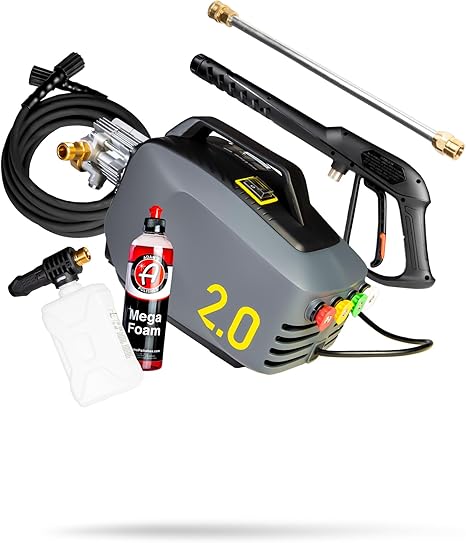
- Around 1800 PSI
- High-flow 2.0 GPM design
- Premium induction-focused system
If you spend weekends washing vehicles, the Active 2.0 feels completely different from typical big-box electric pressure washers.
This machine has developed a cult following among detailing enthusiasts for its smooth pressure delivery and strong compatibility with foam cannons.
The lower PSI number initially scares some buyers away, but the high flow rate matters more for rinsing and foam performance.
Real-World Use
Where this pressure washer shines is in consistency and refinement.
Foam cannons produce thicker foam than most residential units. Trigger response feels smoother. Pressure remains stable during long wash sessions.
The wall-mount compatibility is another huge plus for garage detailing setups.
The biggest downside is cost. Accessories also add up quickly if you go deep into detailing gear.
Pros
- Fantastic for car washing
- Excellent foam cannon performance
- Smooth pressure delivery
- Compact wall-mount potential
- High-quality hose feel
Cons
- Expensive
- Less ideal for large driveway restoration
- Accessories can become costly
Best For
Best pressure washer for cars | Foam cannon users | Garage detailing setups | Frequent vehicle cleaning
Verdict
Car enthusiasts will appreciate the refinement here more than raw PSI numbers.
5. RYOBI 2500 PSI RY142500 Electric Pressure Washer

- 2500 PSI
- Compact residential frame
- Brushless-style performance focus
Ryobi consistently nails homeowner-friendly pressure washers, and this model proves why the brand gets recommended so often.
For a compact pressure washer, this thing delivers impressive cleaning speed.
It handles fences, patios, siding, and moderate driveway cleaning comfortably without feeling oversized or difficult to manage.
Real-World Use
The wheel setup is one of the better designs in this category. It moves well across uneven concrete and rough patios.
Noise stays relatively controlled compared to larger heavy-duty units.
The biggest tradeoff here is hose length. Larger homes may require moving the machine more frequently than ideal.
Some long-term users also mention that accessory quality can feel inconsistent depending on bundled kits.
Pros
- Great portability
- Strong residential cleaning performance
- Easy storage
- Good wheel stability
- Beginner-friendly setup
Cons
- Hose could be longer
- Some bundled accessories feel average
Best For
Pressure washer for small spaces | Townhomes | General home maintenance | Patios and siding | Medium-duty driveway cleaning
Verdict
For homeowners wanting strong performance without a huge machine, this is one of the smartest middle-ground options available.
Best Electric Pressure Washer Comparison Table
| DEWALT DWPW2100 Electric Pressure Washer | Greenworks 3000 PSI TruBrushless Electric Pressure Washer | Sun Joe SPX3000 Electric Pressure Washer | Active 2.0 Electric Pressure Washer | RYOBI 2500 PSI RY142500 Electric Pressure Washer | |
| Best Use | Overall home use | Driveways & patios | Budget cleaning | Car detailing | Compact residential use |
| PSI | 2100 | 3000 | 2030 | 1800 | 2500 |
| GPM | 1.2 | 2.0 peak | 1.76 | 2.0 | 1.2 |
| Motor Type | Universal | Brushless induction | Universal | Premium electric system | High-performance electric |
| Noise Level | Low | Moderate | Moderate | Very low | Low |
| Foam Cannon Performance | Good | Good | Average | Excellent | Good |
| Hose Quality | Good | Excellent | Average | Excellent | Good |
| Storage Convenience | Excellent | Fair | Good | Excellent | Very good |
| Driveway Cleaning | Good | Excellent | Fair | Fair | Good |
| Car Washing | Good | Good | Good | Excellent | Good |
| Portability | Excellent | Fair | Good | Excellent | Excellent |
| Best For Small Spaces | Yes | No | Yes | Yes | Yes |
How to Choose the Best Electric Pressure Washer

Choosing the best electric pressure washer comes down to more than PSI numbers on a box.
A lot of manufacturers inflate pressure claims, and real-world performance often depends more on flow rate, motor quality, and hose durability than headline PSI alone.
PSI vs GPM
PSI measures pressure.
GPM measures water flow.
Most homeowners obsess over PSI, but GPM often matters more for faster cleaning. A washer with strong flow cleans patios and driveways more efficiently because it moves more debris at once.
For basic home use:
- 1800-2100 PSI works well for cars, siding, and patios
- 2500-3000 PSI is better for concrete and driveway cleaning
Induction vs Universal Motors
Induction and brushless motors usually run quieter, last longer, stay cooler during extended sessions, and require less maintenance.
Universal motors are lighter and cheaper but tend to wear faster under heavy use.
Hose Quality Matters More Than People Expect
Cheap hoses are one of the biggest frustrations with budget electric power washers. Common complaints include constant kinking, stiffness in cold weather, connector leaks, and difficult storage.
Steel-braided or anti-kink hoses make a huge difference during longer cleaning sessions.
Foam Cannon Compatibility
If you wash vehicles regularly, foam cannon support matters.
Many cheaper washers technically support foam cannons, but produce weak watery foam because the flow rate is too low.
That’s one reason detailing enthusiasts gravitate toward models like Active and Greenworks.
Portability and Storage
For garages with limited space, compact pressure washer designs are a massive advantage.
Look for onboard nozzle storage, hose reels, cord hooks, stable wheels, and compact vertical frames.
Larger heavy-duty units clean faster but become annoying to store.
Noise Levels
Even powerful electric pressure washers remain dramatically quieter than gas models.
That makes them better for townhouses, dense neighborhoods, early morning cleaning, and indoor garage detailing.
Durability Concerns
Long-term users consistently report these common issues on cheap models:
- Plastic fittings cracking
- Hose leaks
- Pressure inconsistency
- Overheating motors
- Weak trigger handles
- Cheap wheels breaking
Spending slightly more upfront often saves frustration later.
Final Verdict: Which One Should You Buy?
If you want the safest overall recommendation for most homeowners, the DeWalt DWPW2100 is the best balance of usability, portability, reliability, and cleaning performance.
If driveway cleaning is your priority, the Greenworks Pro 3000 PSI delivers the strongest overall residential performance.
For car enthusiasts, the Active 2.0 is easily the most refined detailing-focused option here.
If you want something affordable and beginner-friendly, the Sun Joe SPX3000 still offers excellent value.
And if compact storage matters most, the Ryobi RY142500 remains one of the smartest all-around residential picks.
FAQ
Are electric pressure washers worth it?
Yes. Modern electric pressure washers are quieter, easier to maintain, and far more capable than older models. Many now offer enough power for patios, siding, cars, decks, and moderate driveway cleaning.
What is the best electric pressure washer overall?
For most homeowners, the DeWalt DWPW2100 is the best overall balance of power, portability, reliability, and ease of use.
Are electric pressure washers strong enough for driveways?
Yes, especially models above 2500 PSI with strong GPM output like the Greenworks Pro 3000 PSI.
Which pressure washer is best for washing cars?
The Active 2.0 is one of the best pressure washers for cars thanks to its excellent foam cannon compatibility and smooth pressure delivery.
How loud are electric pressure washers?
They’re significantly quieter than gas models. Most sound more like a loud shop vacuum instead of a small engine.
Are electric pressure washers better than gas models?
For most homeowners, yes. Gas models still dominate extreme heavy-duty cleaning, but electric units are quieter, easier to store, require less maintenance, and start instantly.
What PSI do I need for home use?
- 1800-2100 PSI: cars, patios, siding
- 2500+ PSI: driveways, concrete, deck restoration
Which electric pressure washer is best for patios?
The Greenworks Pro 3000 PSI and Ryobi 2500 PSI are excellent for patio cleaning because they combine strong pressure with solid maneuverability.
Can electric pressure washers handle heavy-duty cleaning?
Premium models absolutely can. Brushless systems from Greenworks and DeWalt now approach light gas-model performance for residential cleaning.
How long do electric pressure washers last?
Good models typically last 5-10 years with proper storage and seasonal maintenance.
Do electric pressure washers require maintenance?
Very little compared to gas models. Most maintenance involves draining water before storage, preventing hose damage, cleaning nozzles, and checking fittings for leaks.
Are expensive pressure washers more reliable?
Usually, yes. Premium models often include better pumps, stronger hoses, more durable fittings, better motors, and longer warranties.
What’s the best compact electric pressure washer?
The Ryobi RY142500 is one of the best compact pressure washers for homeowners with limited storage space.