Building a garage gym sounds like absolute freedom until you actually start doing it. You picture yourself blasting your own music, lifting heavy, and never waiting for a squat rack again. Then reality hits. You realize you have a sloping concrete floor, exactly one usable electrical outlet, and a budget that vaporizes the second you start looking at barbells.
I’ve built two garage gyms. The first one was a disaster of cheap Amazon buys and wobbly benches that terrified me every time I benched over 225. The second one? Built like a bunker.
If you buy the wrong gear, your garage just becomes a very expensive storage unit for regret. Buy the right stuff the first time. You don’t need commercial gym equipment, but you do need gear that can survive concrete dust, temperature swings, and being dropped.
Here is exactly what you need to build a functional, heavy-duty garage gym, featuring the products on Amazon right now that are actually worth your money.
1. The Foundation: Flooring
Most people buy their rack first. That’s a mistake. You have to fix the floor before you drop a single piece of steel. Concrete destroys plates. Plates destroy concrete.
If you deadlift heavy, you will eventually crack your garage floor without protection. Cheap, half-inch puzzle mats from big box stores pull apart the second you do a burpee or plant your feet for a heavy press. You need dense, heavy rubber.
Top Pick: IncStores 3/4″ Extreme Mats
You want something that mirrors the horse stall mats you find at farm supply stores, but shipped straight to your driveway. IncStores makes a 3/4-inch thick rubber mat that laughs at dropped barbells.

Why it stands out: This isn’t foam. It’s vulcanized rubber. It weighs a ton, sits completely flat, and doesn’t shift when you drag a bench across it. It absorbs sound, which keeps your neighbors from calling the cops when you drop deadlifts.
Specs in Plain English:
- Thickness: 3/4 inch (the gold standard for heavy lifting).
- Material: Recycled vulcanized rubber crumb.
- Weight: Heavy enough that it won’t slide around.
The Good, The Bad, and The Brutal:
- Pros: Indestructible. Protects your foundation from cracking. Highly slip-resistant even when you sweat puddles onto it.
- Cons: The smell. Fresh vulcanized rubber reeks for about three weeks. You will need to leave your garage door open to off-gas. They are also incredibly heavy and miserable to move by yourself.
Who it’s best for: Anyone lifting actual weight. If you strictly do yoga, buy foam. If you move iron, buy these.
2. The Centerpiece: Power Rack
If you buy one thing for your garage gym, make it a rack. Everything else hangs off that decision.
A power rack replaces a spotter. When you fail a squat in your garage at 5 AM, nobody is there to help you. The pin safeties on a rack catch the weight so you don’t snap your spine. Don’t buy a flimsy half-rack if you have the ceiling height for a full cage.
Top Pick: Fitness Reality 810XLT Super Max Power Cage
You don’t need a $1,500 rack from a boutique brand to get strong. You need steel that holds weight. The Fitness Reality 810XLT is arguably the most battle-tested budget rack on the internet.

Why it stands out: It boasts an 800-pound weight capacity. Unless you are an elite powerlifter, you will never outgrow this. It has a surprisingly stable footprint for something that costs less than a car payment, and it fits perfectly in a standard garage without scraping the ceiling.
Specs in Plain English:
- Dimensions: 50.5″ L x 46.5″ W x 83.5″ H. Fits under 8-foot ceilings easily.
- Steel Gauge: 2×2 inch tubular steel frame.
- Included Extras: Multi-grip pull-up bar, two solid steel safety bars, two J-hooks.
The Good, The Bad, and The Brutal:
- Pros: Incredible price-to-performance ratio. The multi-grip pull-up bar is aggressive and feels great. Easy to assemble with a basic socket wrench set.
- Cons: The included J-hooks are bare steel on the inside. They will chew up the knurling on your barbell over time. Spend a few extra bucks on Amazon for UHMW plastic-lined J-hooks. Also, the hole spacing isn’t uniform all the way up, which can make dialing in bench press height annoying for some body types.
Setup Advice: Put the rack together loosely, get it exactly where you want it on your rubber mats, and then tighten every bolt. If you plan to use suspension straps or do kipping pull-ups, weigh the back down with plate posts or bolt it directly to a lifting platform.
3. The Connection Point: The Barbell
Never cheap out on the barbell. It is the only piece of equipment you actually touch during every single lift.
Cheap bars bend. The sleeves stop spinning, which shreds your wrists during cleans. The knurling (the rough pattern on the bar) either feels like a cheese grater or completely smooth glass. You need a mid-tier “multipurpose” bar.
Top Pick: Synergee Regional Olympic Barbell
Synergee quietly started making incredibly reliable bars that compete directly with brands charging double. The Regional bar hits the absolute sweet spot for a garage lifter.

Why it stands out: It features a 190,000 PSI tensile strength. In human terms, it won’t bend and stay bent unless you drop it loaded on top of a steel box. It uses needle bearings instead of cheap bushings, meaning the sleeves spin fast and smoothly.
Specs in Plain English:
- Weight: Exactly 20kg (44lbs).
- Finish: Cerakote or Hard Chrome (get Cerakote, it fights garage rust better).
- Spin Mechanism: 10 needle bearings.
- Knurl: Dual marks (Olympic and Powerlifting), no center knurl.
The Good, The Bad, and The Brutal:
- Pros: The whip (flexibility) is perfect for deadlifts and cleans without feeling like a noodle on heavy squats. The Cerakote finish looks incredible and actively prevents the rust that plagues humid garages.
- Cons: No center knurl. If you low-bar squat heavy, you might miss the extra grip on your upper back. The bearings spin almost too fast if you are strictly a powerlifter doing slow grinds.
Who it’s best for: The hybrid lifter. If you do squats, deadlifts, bench, and throw in some CrossFit-style power cleans, this bar does it all.
4. The Resistance: Weight Plates
Iron plates sound amazing right up until you drop a deadlift on your concrete foundation. Iron is loud, punishing, and rattles the walls.
For a garage gym, you want bumper plates. They bounce. They absorb impact. They let you bail out of a lift safely.
Top Pick: HulkFit Color Coded Bumper Plates
There is virtually no difference between budget bumper plates and expensive bumper plates until you get into competitive Olympic lifting. Rubber is rubber. HulkFit provides dense, color-coded rubber that gets the job done without draining your bank account.

Why it stands out: They are high-density rubber with stainless steel inserts. The color-coding makes plate math fast at 6 AM when your brain isn’t working yet.
Specs in Plain English:
- Material: High-density rubber.
- Insert: 2-inch stainless steel ring (fits standard Olympic bars).
- Collar diameter: Standard IWF 450mm.
The Good, The Bad, and The Brutal:
- Pros: Price. Durability. They take a beating on concrete and keep their shape. The bounce is relatively dead, meaning the bar won’t fly across the garage when dropped.
- Cons: The 10-pound and 15-pound plates are notoriously thin. If you drop a barbell loaded only with 10s, they will warp like a taco. Always pair them with larger plates. They also arrive greasy from the manufacturing mold; wipe them down with dish soap immediately.
Purchasing Strategy: Don’t buy a massive set at once. Buy a pair of 45s, a pair of 25s, a pair of 10s. Buy more 45s as you get stronger.
5. The Support: Adjustable Bench
A cheap bench wobbles. Trying to press heavy dumbbells while your back shifts side to side is a miserable experience.
You need an FID bench (Flat, Incline, Decline). This unlocks upper chest work, seated shoulder presses, and chest-supported rows.
Top Pick: Fitness Reality 1000 Super Max Weight Bench
Sensing a trend? Fitness Reality dominates the heavy-duty budget space. The 1000 Super Max is a tank.
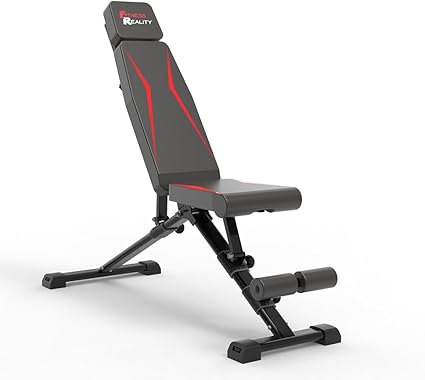
Why it stands out: It has an 800-pound weight capacity and a uniquely wide back pad. Most cheap benches are incredibly narrow, leaving your shoulder blades hanging off the sides. This bench supports your upper back properly.
Specs in Plain English:
- Positions: 12 adjustable backrest positions, 2 front leg positions.
- Pad thickness: 1.75 inches of high-density foam.
- Portability: Has transport wheels.
The Good, The Bad, and The Brutal:
- Pros: Extremely sturdy. The front leg folds flat, meaning you can slide the entire bench under a bed or stand it upright against a garage wall to save space.
- Cons: The gap. Because it adjusts, there is a gap between the seat and the back pad. When laid completely flat, your lower back might rest right in that ditch depending on your height. It’s annoying, but standard for budget adjustable benches.
6. Space Savers: Dumbbells
A full run of hex dumbbells from 5 to 100 pounds takes up an entire wall and costs a fortune. You do not have the space for that in a two-car garage competing with a lawnmower. Adjustable dumbbells are the only logical choice.
Top Pick: Bowflex SelectTech 552
These have been around forever for a reason. They replace 15 sets of weights and take up two square feet of floor space.

Why it stands out: The dial mechanism is absurdly fast. You twist a dial on each end, lift the handle, and the exact weight you want comes out of the cradle. Dropsets become effortless.
Specs in Plain English:
- Weight Range: 5 to 52.5 pounds per dumbbell.
- Increments: Adjusts in 2.5-pound increments up to the first 25 pounds.
- Footprint: 16.9″ L x 8.3″ W x 8.9″ H.
The Good, The Bad, and The Brutal:
- Pros: Massive space savings. The weight adjustments are smooth and instantaneous. The grips are comfortable and naturally ergonomic.
- Cons: You absolutely cannot drop these. The internal locking mechanisms contain heavy-duty plastic. If you drop a 50-pound dumbbell on concrete after a hard set of chest presses, you will snap the internal gears and ruin a very expensive piece of equipment. You must treat them with respect. 52.5 pounds also becomes too light for heavy rows after a year of consistent lifting.
7. The Engine: Conditioning Equipment
Don’t buy an elliptical. Don’t buy a treadmill for a dusty, un-climate-controlled garage; the belt motors pull tons of electricity and get ruined by grit.
You need something human-powered. Air resistance is king. The harder you pull, the harder it fights back.
Top Pick: Concept2 RowErg
This is the undisputed king of conditioning equipment. Every CrossFit gym, every Olympic training center, and every serious garage gym has one.

Why it stands out: It is practically indestructible. It uses a fan flywheel for resistance, requiring no electricity for the motor. It breaks down into two pieces in five seconds, letting you stand it up in a corner out of the way.
Specs in Plain English:
- Resistance: Air flywheel with a 1-10 damper setting.
- Monitor: PM5 performance monitor (connects via Bluetooth to heart rate monitors and apps).
- Maintenance: Oil the chain once a year. That’s it.
The Good, The Bad, and The Brutal:
- Pros: The smoothest rowing stroke in the industry. The PM5 monitor tracks metrics with terrifying accuracy. It holds its resale value so well that if you quit working out in two years, you can sell it locally for almost what you paid for it.
- Cons: It is loud. The whoosh of the fan gets intense during sprints. Also, rowing technique takes time to learn. If you just jump on and start yanking with your lower back, you will hate it.
8. Chaos Control: Storage Solutions
A messy garage gym is a dangerous garage gym. Tripping over a 45-pound plate while backing up for a squat is a great way to end up in the emergency room. Get your plates off the floor.
Top Pick: Yes4All Wall-Mounted Weight Plate Holders
If you have exposed wall studs, use them. A standalone plate tree takes up floor space. Wall-mounted pegs keep the floor clear.

Why it stands out: It’s simple, cheap, and turns dead wall space into storage.
Specs in Plain English:
- Material: Heavy-duty steel with a black powder coating.
- Dimensions: 9-inch long sleeves. angled slightly upward so plates don’t slide off.
- Hardware: Comes with lag bolts for wood studs.
The Good, The Bad, and The Brutal:
- Pros: Frees up floor space immediately. Cheap enough to buy four of them and organize your entire plate collection by weight.
- Cons: You must hit a wall stud. If you screw these into drywall alone, the weight of the plates will rip a massive hole in your wall instantly. You need a stud finder and a drill.
9. The Wildcard: Optional Add-Ons
Once the big pieces are in place, you want cheap accessories that wildly expand what you can do. A landmine attachment is the single highest ROI accessory you can buy for a garage gym.
Top Pick: Yes4All T-Bar Row Landmine Attachment
A landmine anchors one end of your barbell to the floor, turning the bar into a lever.

Why it stands out: For under thirty bucks, you unlock heavy T-bar rows, landmine presses for your shoulders (great if overhead pressing hurts your joints), rotational core work, and heavy goblet squats.
The Good, The Bad, and The Brutal:
- Pros: Slides easily onto the base of your power rack or a stacked weight plate. Extremely versatile for building a thick upper back.
- Cons: Can scratch the sleeve of your barbell over time. Wrap a small piece of athletic tape around the barbell sleeve if you are extremely protective of your bar’s finish.
Getting It Done

Stop endlessly scrolling through gear reviews. Paralysis by analysis kills more home gyms than lack of budget. Clear out the corner of the garage. Put down the rubber mats. Bolt the rack together. Buy the bar and the plates.
The moment you lock the door, turn on your music, and hit that first heavy set without waiting for a stranger to finish texting on the bench press, you realize the investment was worth every single penny!