
Leaving pavement behind changes everything. Muddy forest paths, loose alpine rock, sun-baked desert trails — the ground is always doing something unexpected, and road shoes just aren’t built for it.
The lateral shifts, the unpredictable surfaces, the sudden need to brake on a steep descent: all of it demands a different kind of shoe.
Trail shoe technology has gotten genuinely impressive lately. Deeper, multi-directional lugs for mud. Rock plates thin enough that you forget they’re there. Uppers that drain water in seconds.
What follows are five shoes currently worth your money, matched to what the terrain actually asks of them.
Best Trail Running Shoes – Our Top Picks!
Choosing the best trail running shoes requires matching the outsole and cushion level to your specific environment.
The following five models represent the pinnacle of trail engineering, offering specialized solutions for everything from technical mountain climbs to smooth fire roads.
1. Salomon Speedcross 6

For mud, the Speedcross is the obvious choice, and has been for years.
The 5mm chevron lugs bite deep into soft ground, and the SensiFit upper wraps your foot tightly enough that you stop second-guessing your footing on steep, off-camber sections.
The Quicklace system is either a godsend or annoying, depending on your tolerance for non-standard lacing. The build holds up over seasons of abuse.
Best for: Mud, wet terrain, loose dirt, snow.
2. Hoka Speedgoat 6

The Speedgoat looks ungainly and runs light. That’s the whole trick.
The Vibram Megagrip outsole handles wet rock better than almost anything else at this price, and the maximalist cushioning genuinely extends how long you can run before your knees start registering a complaint.
It’s not fast — it’s not trying to be — but for long days on rocky trails, it’s hard to argue with.
Best for: Ultra-distances, rocky terrain, anyone who wants joint protection over ground feel.
3. Brooks Cascadia 17

The Cascadia is the most sensible shoe on this list, which isn’t a knock. The Ballistic Rock Shield does exactly what it sounds like: sharp rocks and roots stop registering through the sole.
The Trail Adapt System — a midsole, rock shield, and outsole integrated into one unit — keeps the shoe stable on uneven ground without feeling stiff.
Good for beginners, good for technical hiking, good for anyone who wants protection over performance.
Best for: All-terrain, beginners, technical hiking.
4. Saucony Peregrine 14

This is the shoe for people who find maximalist trail shoes exhausting to run in.
The Peregrine is light, low-profile, and lets you actually feel the trail underfoot. It’s a feature, not a flaw, for anyone doing fast-paced efforts where quick foot adjustments matter.
The wide-spaced lugs shed mud without clogging.
It’s not the most protective shoe here, but it’s the most athletic.
Best for: Trail racing, short-to-medium fast efforts, runners who want ground feel.
5. Altra Lone Peak 8
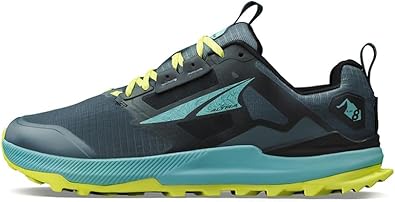
The Lone Peak has a cult following for a reason.
The zero-drop platform and wide toe box let your feet sit the way feet are shaped to sit, which matters a lot over 20+ mile days when your feet swell and a narrow toe box becomes genuinely painful.
The MaxTrac outsole and StoneGuard protection handle mixed terrain well enough.
If you’ve never run in zero-drop, expect an adjustment period — your calves will let you know.
Best for: Thru-hiking, wide feet, long-distance runners who want natural foot positioning.
Quick Comparison
Model
Drop
Best Terrain
Key Advantage
Salomon Speedcross 6
10mm
Mud / Loose Dirt
Maximum Traction Lugs
Hoka Speedgoat 6
4mm
Rocky / Technical
Max Cushion & Vibram Grip
Brooks Cascadia 17
8mm
All-Terrain
Trail Adapt Stability
Saucony Peregrine 14
4mm
Fast / Technical
Lightweight Agility
Altra Lone Peak 8
0mm
Natural / Long-Dist
Wide FootShape™ Toe Box
The honest answer is that no single shoe works everywhere. If you run mostly mud, get the Speedcross. If you’re doing your first ultra, the Speedgoat will carry you further than you think.
And if you’ve been fighting blisters and black toenails on long runs, try the Lone Peak before assuming your feet are the problem.
Take the time to consider where you run most; your perfect trail partner is waiting to help you see what’s over the next ridge!